Inside the World of a Modern Gin Bar
@judahmjll412
November 6, 2026 · 15 min read
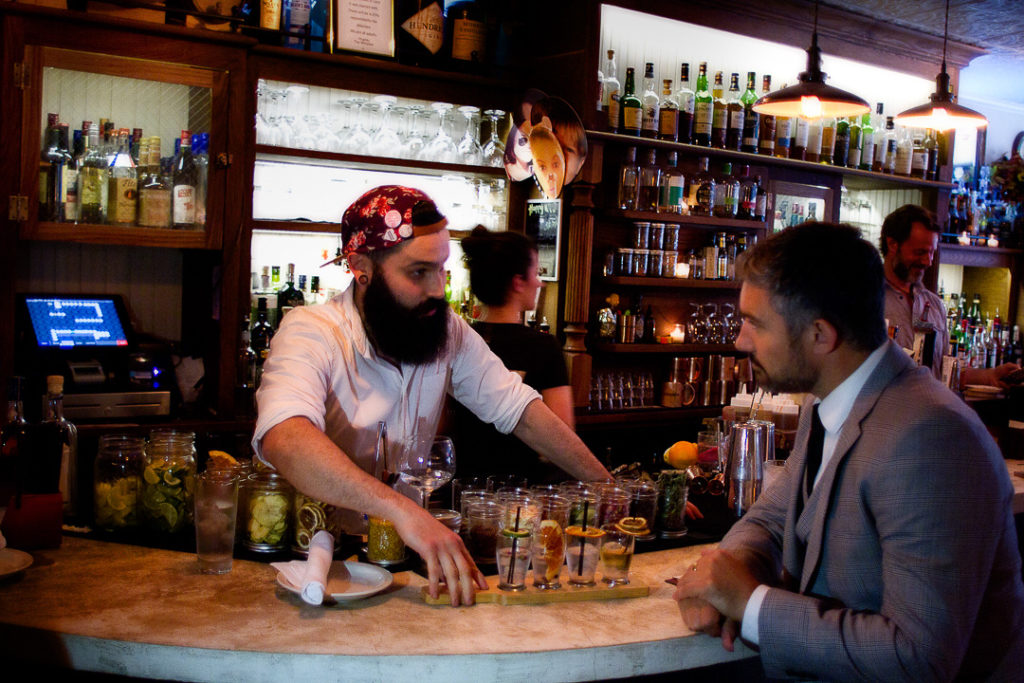
Walk into a good gin bar and you notice the details before you consciously register them. The light is usually softer than in a beer-led pub, but not so dim that you cannot read a label across the back bar. The shelves matter. The glassware matters. The smell matters, too, though many operators underestimate it. Citrus oils, clean ice, polished wood, fresh herbs, and a faint trace of juniper can create the kind of first impression that tells a guest they are in capable hands.
That first impression carries more weight than it used to. A modern Gin Bar is no longer just a place with a large gin selection and a decent tonic. Guests arrive with stronger opinions, broader experience, and sharper expectations. Some know their London dry from their Old Tom. Some want local craft bottles and unusual botanicals. Others simply want a flawless gin and tonic served at the right temperature in a glass that feels considered rather than gimmicky. The challenge for the bar is to satisfy all of them without becoming stiff, theatrical, or exhausting.
The best gin bars manage to feel both serious and relaxed. That balance is harder to strike than it looks.
More than a shelf full of bottles
Years ago, many venues thought a gin offer could be built by sheer volume. If the back bar held 80 or 100 bottles, that was enough to call the place a specialist. It rarely worked as well as owners hoped. Large ranges without structure create confusion for staff and fatigue for guests. People freeze when they are given too many options without guidance. Worse, a bloated selection often means slow-moving stock, oxidized garnishes, and team members who can recite label notes but cannot explain when one gin actually drinks better than another.
A modern gin bar tends to be more edited. Not small, necessarily, but curated. There is usually a backbone of classic styles, a section for contemporary gins with forward citrus or floral profiles, a few savory or spice-led bottles, some local producers if the market values provenance, and a handful of genuinely unusual options that give the list personality. The point is not to impress with quantity. The point is to make choices legible.
That curation starts with knowing what role gin plays in the room. In some bars, gin is the star and everything else supports it. In others, gin is the entry point into a broader cocktail program. Those are different businesses. A place focused on exploration may carry multiple tonic styles, staff tasting notes, and gin flights. A busier neighborhood site may do better with a tighter list and faster service standards. Neither is inherently better. The right answer depends on rent, footfall, labor costs, and the kind of evening the room is designed to host.
The modern palate, and what it changed
Gin has gone through a long evolution in the public imagination. For many drinkers, it used to mean one or two heritage brands, a splash of tonic, and maybe a slice of lemon. Then came the craft wave, along with a flood of botanical storytelling. Lavender, seaweed, olive leaf, pepperberry, chamomile, heather, yuzu, fennel, bergamot, pine. Some of those additions brought real nuance. Some were more marketing than substance. Still, they changed the market.
Guests now expect distinction. If a gin bar offers ten labels that all land in roughly the same dry, juniper-citrus lane, the selection feels flat no matter how expensive it is. The stronger bars build around contrast. A resinous, piney gin sits beside something bright and lemon-led. A classic London dry is available for a Martini, while a softer, more perfumed expression might be reserved for a spritz-style serve. A bar with judgment does not simply ask what is popular. It asks what each bottle is for.
This is where staff training becomes the difference between a specialist venue and a bar that merely looks like one. Guests do not need encyclopedic lectures at the table. They need useful translation. If someone says they want “something fresh but not too floral,” the bartender should know exactly where to go. If a guest thinks they dislike gin because past experiences tasted too much like perfume, the right recommendation can recover the category in one drink.
That moment happens often. It is one of the pleasures of service in a gin-led room. You watch a person move from skepticism to curiosity to delight in about six minutes.
The architecture of a gin and tonic
For all the creativity surrounding gin, the drink that reveals the quality of a bar most quickly is still the gin and tonic. It looks simple and is anything but. The ratio, the carbonation, the size and texture of the ice, the glass shape, the garnish, and the temperature of both ingredients all matter. A premium gin poured over tired half-melted cubes and drowned in flat tonic is a waste of money and a quiet act of sabotage.
There are a few principles that separate an average serve from a memorable one:
- Cold glass, cold tonic, and dense fresh ice do more for quality than exotic garnish ever will.
- Garnish should support the botanicals, not perfume the room from three tables away.
- Tonic choice changes the drink more than many guests realize, especially with delicate or savory gins.
- Ratios should reflect the gin’s intensity rather than follow a rigid house formula.
- The serve must remain easy to drink, because elegance matters more than spectacle.
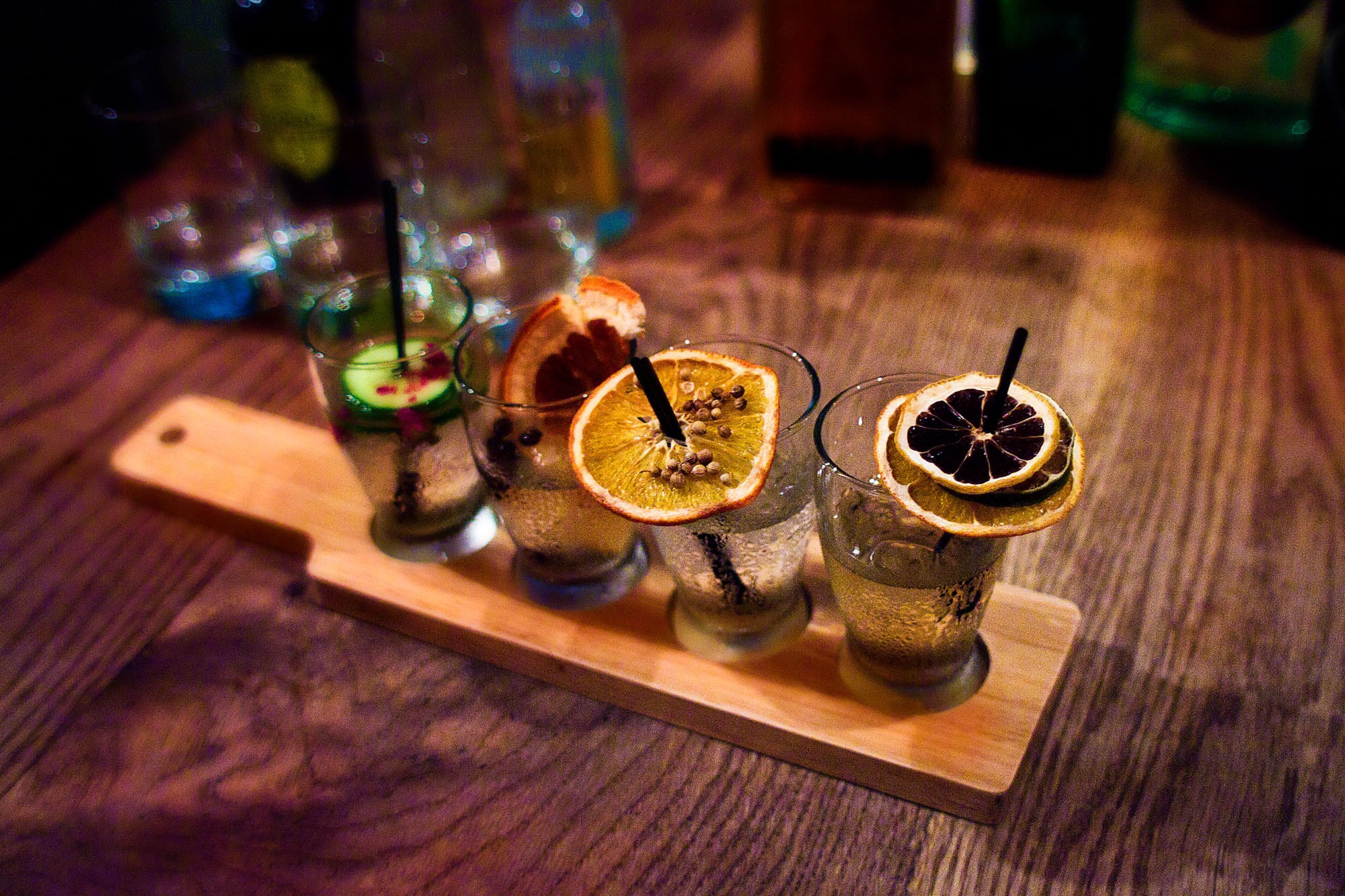
That last point deserves emphasis. A modern gin bar can be tempted by visual excess. Balloon glasses the size of fishbowls, towers of rosemary, dehydrated citrus wheels, flowers, peppercorn clouds, smoke, and clips hanging from rims. Some of it photographs well. Much of it gets in the way. Large-format presentation has its place, particularly when a venue wants a celebratory feel, but every addition to a glass should earn its position. If the garnish forces the guest to maneuver around a shrub to take a sip, the bar has confused decoration with hospitality.
The best serves are often surprisingly restrained. A bright, classic dry gin with a crisp tonic and a clean swath of lemon peel can outperform a far more elaborate build. Simplicity is not a lack of imagination. It is confidence.
Why ice is one of the most expensive ingredients in the room
Operators sometimes speak about ice as if it is free, because it comes from water. In practice, ice is one of the most consequential cost centers in service. Machines need maintenance, storage bins need sanitation, and bad handling creates waste at a stunning pace. For gin, ice is particularly important because dilution can either open a spirit beautifully or flatten it into anonymity.
Large, solid cubes tend to work best for highballs because they chill while melting slowly. Cracked or wet ice shortens the life of a drink. Frosty-looking cubes may seem attractive, but poor density often signals trapped air and faster dilution. Gin Bar In a busy Gin Bar, consistency of ice matters almost as much as consistency of pours. Guests may not describe the technical issue accurately, but they notice when one drink holds and another collapses in five minutes.
There is also a practical service point here. If a team is under pressure and the station is set up badly, the quality of the ice program falls first. Scoops go missing. Glasses get overhandled. Garnish drips into wells. The bars that protect standards under volume are usually the ones that designed their workflow carefully long before the Friday rush.
The back bar as a working library
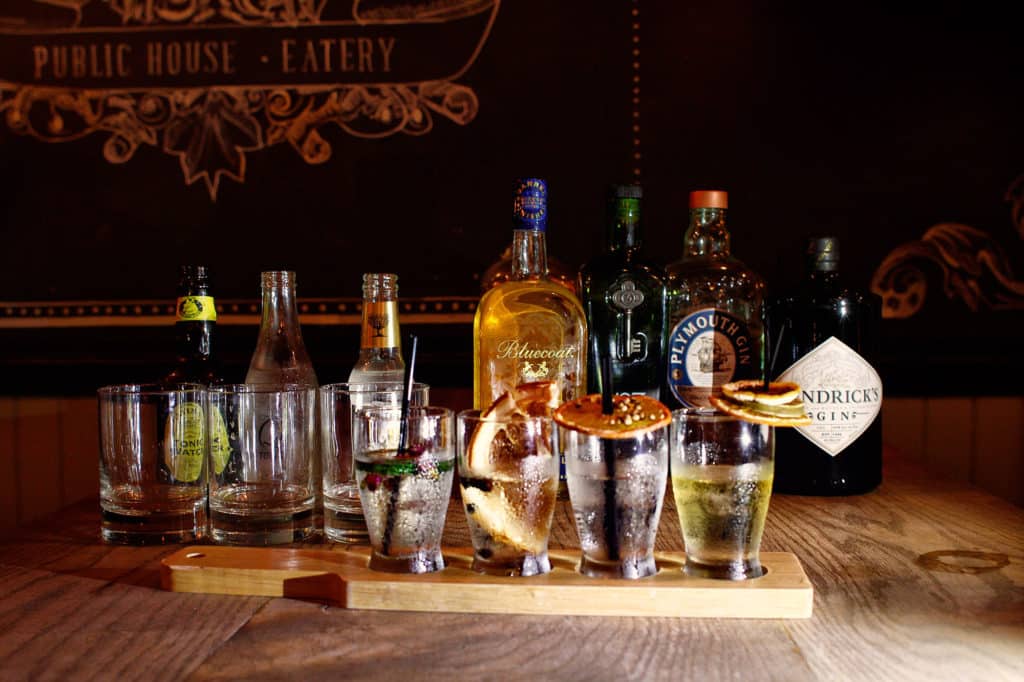
A proper gin back bar should invite exploration, but it also needs internal logic. Grouping by geography can be useful if provenance is central to the concept. Grouping by flavor family is usually more helpful for service. Staff need to find and explain quickly. If a bar keeps a Mediterranean-style herbaceous gin next to a dessert-like pink expression solely because they came from the same country, speed and clarity suffer.
Most strong programs also distinguish between bottles that are there to sell in volume and bottles that are there to start conversations. That sounds obvious, but it affects purchasing in a real way. A bar may love an obscure coastal gin with a saline finish, but if it costs heavily, moves slowly, and performs best only in one specific serve, it cannot occupy too much capital. The romance of a specialist category has to coexist with inventory reality.
A useful range often includes these roles:
- a benchmark London dry for classics
- a softer modern gin for approachable gin and tonics
- a higher-proof option for Martinis and stirred drinks
- one or two distinctive seasonal or local bottles
- a small set of conversation pieces that broaden the guest’s idea of what gin can be
That mix gives the bar flexibility. It also helps staff upsell honestly. Honest upselling is underrated. Guests do not resent spending more when they can taste the difference and understand why a recommendation suits their preference.
Cocktails, and the danger of hiding the spirit
Gin is extraordinarily adaptable in cocktails, which is both a strength and a trap. It can carry citrus with grace, handle bitterness, frame vermouth, lift fresh herbs, and tolerate sugar better than many white spirits. But its versatility invites overbuilding. If every cocktail on a gin-forward menu includes five modifiers, two syrups, one foam, and a garnish that arrives on a clothes peg, the spirit itself disappears.
The modern approach tends to be cleaner. Bartenders still play with fat washing, saline solution, tea infusion, clarification, and house ferments, but the best drinks remain legible. You should be able to identify why gin is in the glass rather than vodka or blanco tequila or eau de vie. The structure should make sense.
Classic drinks remain essential because they teach both staff and guests what gin can do without disguise. A Martini reveals texture, proof, and botanical balance. A Negroni shows how a gin cuts through sweetness and bitterness. A Tom Collins can expose weak carbonation or poor citrus balance in a single sip. A French 75, done well, is sharper and more elegant than many bars remember. A modern gin bar earns credibility not by abandoning the canon, but by mastering it and then choosing its innovations carefully.
Menus, too, have changed. The best ones are now written with enough precision to guide but not suffocate. A guest should not need a glossary, yet the descriptions should tell the truth. “Floral and refreshing” is nearly meaningless. “Juniper-led, grapefruit zest, dry finish” is useful. “Savory, green olive, thyme, bracing tonic” is even better for the right drinker.
Food has become part of the equation
One of the more interesting shifts in the category is the rise of food that actually understands gin. Not every gin bar needs a full kitchen, but those that serve food thoughtfully tend to keep guests longer and broaden their appeal beyond the after-work crowd. Gin likes salt, acid, fat, and herbs. It can work beautifully with oysters, cured fish, fried bites, charred vegetables, hard cheeses, and clean, cold desserts.
The specifics matter. A menu full of very sweet dishes can deaden the sharper edges that make gin attractive. Heavy spice can also overwhelm subtler serves, though there are exceptions. A peppery gin and a well-made croquette can be excellent together. So can a citrus-led G and T with tempura prawns, or a Martini with anchovies and buttered toast. The strongest pairings are not forced pairings. They are combinations that respect how people actually eat and drink in social settings.
From a commercial standpoint, food also stabilizes revenue. Spirits-led venues often face uneven trading patterns. A small but well-targeted menu can turn a one-drink visit into a two-hour stay. It can also soften the experience for guests who love the atmosphere of a Gin Bar but do not necessarily want a session built entirely around alcohol.
Service is where the bar reveals its character
A modern gin bar can spend heavily on design and stock, yet still fail on the floor. Service in this category needs a particular tone. Too casual, and the expertise feels fake. Too formal, and the room becomes intimidating. The best staff read the guest quickly. They know when to offer deep detail and when to deliver a crisp recommendation with no fuss.
That means training must cover more than product facts. Team members need to understand sequencing, body language, pace, and restraint. If a couple sits down for one pre-dinner drink, they should not receive a ten-minute seminar on distillation methods. If a solo guest at the bar shows genuine interest, the bartender should be able to talk about vapor infusion, maceration, proofing, and tonic sugar content without sounding like they memorized a brochure.
Good service also includes the willingness to steer people away from expensive mistakes. Not every premium gin deserves a tonic. Some are better in a Martini, where the texture and aromatic detail can stay intact. Some novelty expressions are simply too odd for a first-round recommendation. A trustworthy bartender protects the guest’s evening, not just the check average.
Regulars notice this. Over time, they stop asking for brands and start asking for people. That is the sign of a real bar culture.
The economics behind the romance
From the outside, gin bars can look like high-margin machines. Spirit plus mixer, premium pricing, polished glassware, relatively compact storage. The reality is tighter. Premium stock ties up cash. Good tonics cost more than generic alternatives and move fast. Fresh citrus prices swing. Labor rises when service standards rise, and a specialist team is more expensive to recruit and retain than a general one.
Then there is spoilage and drift. Garnishes dry out. Half-used syrups lose brightness. Open vermouth degrades if the bar’s wine handling is poor. Slow-moving bottles gather dust and silently reduce purchasing flexibility. A venue may carry 70 gins, but if 15 of them barely move, they become decorative inventory rather than working assets.
That is why successful operators track more than top-line sales. They watch contribution margin by serve, tonic usage, waste, hours per cover, and the sales mix between simple highballs and labor-heavy cocktails. They ask whether the hero products of the concept are also the healthiest products for the business. Sometimes they are. Sometimes the drink guests talk about most is one of the least efficient drinks to make.
The practical answer is rarely to strip away ambition. It is to edit with discipline. A list can still feel generous while being commercially sane. A menu can still surprise while protecting margin. Good operators understand that curation is not only a creative act. It is a financial one.
Local identity, global influence
Gin might be one of the easiest spirits through which a bar can express local identity. Distillers everywhere draw on regional botanicals, local water, and place-based narratives. A modern gin bar that ignores nearby producers misses an opportunity, especially when those bottles are good enough to stand on merit rather than hometown loyalty.
At the same time, the category has become profoundly international. Japanese precision, Spanish service rituals, British heritage, Australian botanical boldness, and a wave of experimentation across Europe and North America have all shaped the modern landscape. The strongest bars acknowledge those influences without turning the menu into a geography lesson. They let the room speak through the pour.
Service style often follows this blend. You might see the generosity of Spanish copa-style presentation alongside the crisp efficiency of a city cocktail bar. You might find a local seaweed gin listed next to a century-old London house style, both handled with equal respect. That layering of old and new is part of the category’s appeal. Gin has tradition, but it also has room to play.
What guests remember
Ask people what they remember from a great night in a gin bar and they rarely lead with technical details. They remember how they felt. They remember the first sip of a drink that seemed sharper, colder, and more alive than what they make at home. They remember the bartender who listened properly. They remember a recommendation that landed exactly right. They remember that the room felt lively without being chaotic, elegant without trying too Gin Bar hard.
Those experiences are built from practical decisions. Good lighting. Real acoustics. Clean menus. Fast resets. Ice bins that never run dry. Tonics stored cold. Glasses polished without detergent taint. Staff who know when to move a guest from a safe choice to a more adventurous one. None of it is glamorous in isolation. Together, it creates the feeling of confidence that defines the best bars.
That is the inside story of a modern Gin Bar. It is a category shaped by taste, yes, but also by discipline. Behind the polished back bar sits a web of choices about stock, training, flow, pricing, and restraint. The glamour is real, but it rests on craft. When the room gets that right, gin becomes more than a spirit on a shelf. It becomes the lens through which the entire bar expresses its standards.
The Winslow
243 E 14th St
New York, NY 10003, United States
Phone: +1 212-777-7717
FAQ About Gin Bar
How to do a gin tasting?
Start with a small pour and gently smell the gin before taking a small sip. Notice its juniper, citrus, floral or spice notes, then compare how the flavor changes with a little water or tonic. At a gin bar, ask the bartender to explain the selection and botanical pairings.
How to make the best tasting gin and tonic?
Use chilled gin, fresh tonic and plenty of ice. A common starting ratio is one part gin to two parts tonic, adjusted to taste. Choose a garnish that complements the gin's botanicals and stir gently to preserve the bubbles.
What is the smoothest tasting gin?
There is no single smoothest gin for everyone. Perceived smoothness depends on the botanical recipe, alcohol strength, serving temperature and mixer. Describe whether you prefer citrus, floral, herbal or juniper-forward flavors so a bartender can suggest a suitable style.